(Nano)Chemistry, inside and out
My research is centered on the design, synthesis and applications of nanoparticles using the tools of molecular and materials chemistry.
News and highlights
July 8, 2026: Plenary Conference at ICPC2026The 25th International Conference on Phosphorus Chemistry gathered experts on molecular chemistry, materials chemistry, medecinal chemistry, etc. around the phosphorus element. I had the chance to present our last 16 years of work about metal phosphide nanoparticles and nanocatalysis with phosphine ligands.
|
 |
TREMPLIN project from CNRS Physique: TSUNAMI startsThanks to this internal call for funding, I will be able to explore a new research direction concerning lanthanide oxysulfides nanoparticles for optics and related applications, under the TSUNAMI project. Great news to start the summer!
|
 |
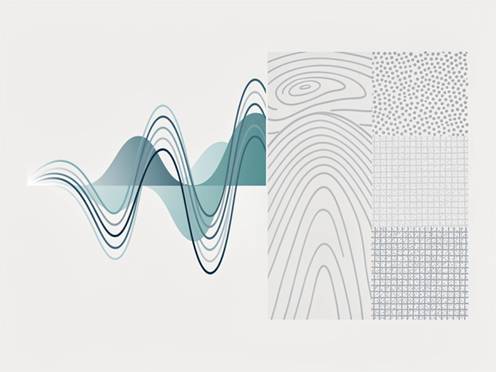
July 1, 2026: TimTex project presented at AMUTech dayAMUTech is our local institute about Advanced materials and Nanotechnologies. I was invited to present our ongoing TimTex project, related to the crossed study of sound and material's texture, to a broad audience of physicists, chemists and biologists.
|
 |
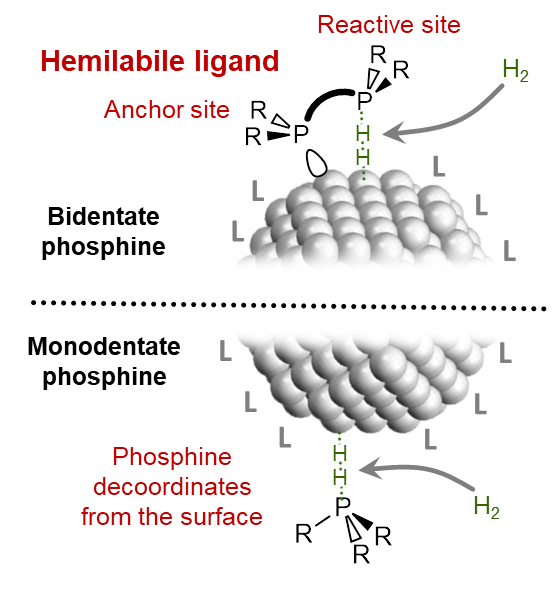
Article: Bidentate phosphines for NanoFLP catalysisIn the framework of NanoFLPs, we attempted to favor the phosphine-nanoparticle interaction by using bidentate molecules. We compared the performances with these of monodentate phosphines with comparable eletronic and steric properties. Read the article. With: Kaltoum, Sophie |
 |
May 20, 2026: GECAT conference in La LondeI was glad to share our latest results on nanocatalyis during this national conference that hosts both homogeneous and heterogenous catalysis.
|
 |
May 18, 2026: Interview for 'L'essentiel Marseille'This daily newsletter is broadly distributed every morning in Marseille area. I was interviewed to talk about the research we do in CINaM. Nicely titled "La nanochimie en do majeur".
|
 |
January 27, 2026: ERC Proof of Concept project acceptedGlad to share the great news: the PRELUDE project was accepted for funding at the ERC Proof of Concept call. We will develop "Precise Deuteration at the Tailored Surface of Nickel Phosphide Nanocatalysts" based on the preliminary results of ERC NanoFLP.
|
 |
More News | Back to top |
Featured Results
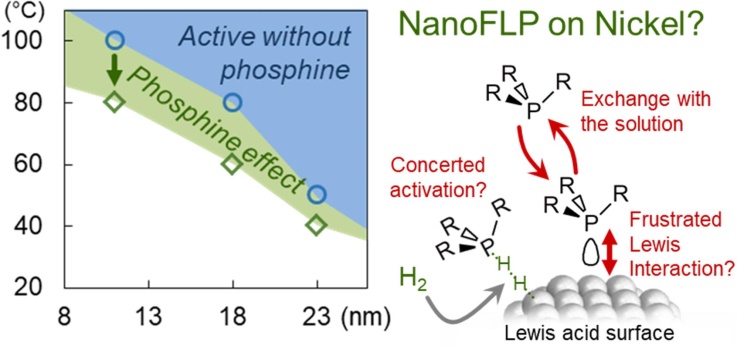
Refining the NanoFLP ConceptStill fighting to unveil an authentic NanoFLP, we uncovered an interesting low-temperature behavior of Ni nanoparticles in the presence of well-selected phosphine. This could be interpreted as the formation of a surface frustrated Lewis pair for H-H cleavage... but also as a consequence of phenylacetylene activation. What do you make of this? |
 |
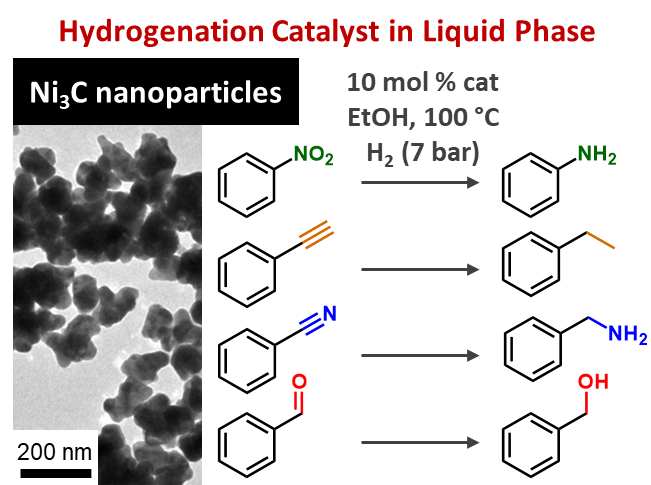
Carbon is our friend!Nickel fame for catalysis now extends to a new guy: nickel carbide. In this work, we show that this phase can be used as a catalyst for the hydrgenation of a number of moieties, coming along a greater robustness than the metallic counter-part. Check out our nickel carbide buddy. |
 |
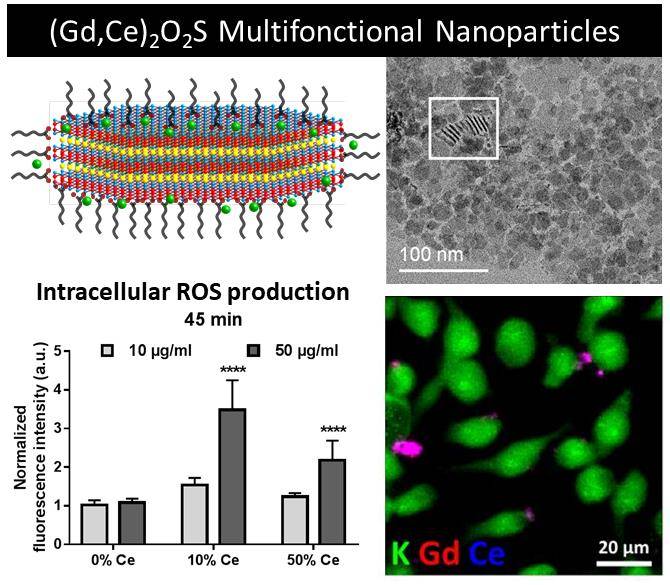
Make them saferIt's a small step for the world of nanoparticles, but a big step for our beloved oxysulfides nanoplates: in this work, we propose to evaluate, in a very preliminary approach, some of the interactions of the nanoparticles with macrophage cells. We turned on the lamp (visible light) and monitored the impact in the production of radicals. Read for yourself. |
 |
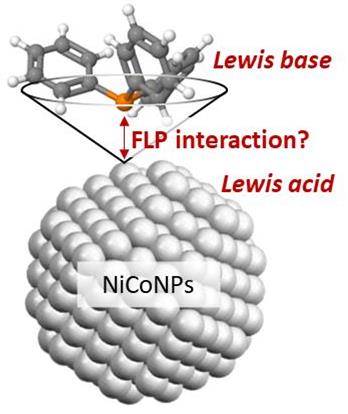
Did you say NanoFLP?We have been proposing for a while to use metal nanoparticles as partners in Frustrated Lewis Pairs. Now, we found that nickel-cobalt nanoparticles associated to well-chosen phosphines likely form such a pair, based on the correlation between Si-H bond activation and the Tolman cone angle of the phosphine: only a tiny range of steric hindrance is suitable, and it is related to the silane bulkiness. We believe we nailed it. Make your own opinion. |
 |
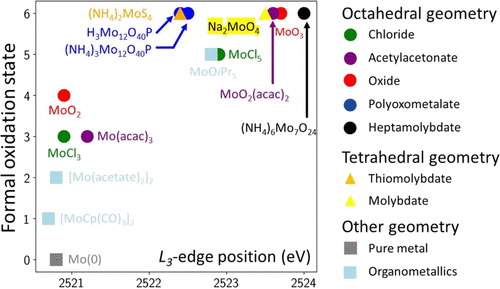
Molybdenum mapped outMolybdenum is a key element of the energy transition. X-ray absortion spectroscopy at the L-edge is an amazing way to analyze it in solids, liquids, composites, etc. Here, we wrote some simple guidelines to interpret the data and we provided a consistent series of spectra for well-known, and less-know, Mo compounds. Read our map. |
 |
More Featured Results | Back to top |
-
You are here
/sophiecarenco/home/ -
Quick links